How To Read A Caliper In Mm
$$ \text{obtained reading} = \text{main scale reading} \, + \, \text{vernier scale reading} $$ Basically, the purpose of using a vernier caliper is to measure the length of round objects with the help of its jaws.
Reading Vernier Calipers Physics 50

The blade scaleshows each inch divided into 10 increments.

How to read a caliper in mm. Four basic readings your caliper can take four kinds of readings: In order to read the measurement readings from vernier caliper properly, you need to remember two things before we start. The vernier scale is one rechnological device that raises the sensitivity of one scale when its division is subdivided.
It is graduated in millimetres or inches. The main scale on the caliper has graduations every 1mm (millimeter) and represents one half of a revolution of the dial. Multiplying the bottom scaling line of the vernier scale read is 10 scale x 0.05 mm resolution equals 0.50 mm.
The 0 of the vernier scale is to the right of the 3 of the main scale plus 5 graduations or 5 millimeters, this means that there is 30mm + 5 mm, then 35 graduations of the main scale or 35 millimeters matches with the 0 of the vernier scale, therefore, the reading is 35mm. Nowadays, the dial caliper has become considerably more popular than the venire caliper. In case of metric units the smallest value that can be measured by the main scale is 1mm.
Each increment equals one hundred thousandths (0.100”). To count how many mm's line between the 0 line on the main scale and the 0 line on the vernier scale. Vernier caliper was invented in 1631 by a french mathematician named pierre vernier.
28 mm + 0 mm − 0 mm = 28 mm. Then to find the line on the vernier scale which exactly coincides with the line on the main scale. Will measure slightly more than 6 inches.
(it takes 5 revolutions to make 1cm or 10mm). Each numbered line on the bottom scale is 0.1mm extra, each unnumbered line is 0.05mm extra. To zero a dial caliper, rotate the bezel so that the needle points to 0.
How to read a vernier caliper in millimeters. On an electronic digital caliper, if the reading is not 0.000, press the zero button so that it does read 0.000. For example, if a vernier caliper output a measurement reading of 13.42 mm, this means that:
There are two scales on a vernier caliper which are used to calculate length; Compared to the venire caliper, a dial caliper is much easier to use and read. You will need calipers or any measuring instrument with a vernier scale and an accuracy of 0.01 mm.
Some dial calipers have blade scales that are located above or below the rack. The 0 marker gives you the first two digits. To read this value the first step is:
Where the movable arm aligns exactly with. Final reading = 12 mm + 0.26 mm − (−0.06 mm) = 12.32 mm reading metric vernier caliper model 1 case 3 (with positive zero error) main scale = 0 × 1 mm = 0 mm The caliper pictured below is measuring roughly 12.5mm +/ 0.1mm.
Bob and sparky explain how to read metric vernier calipers. First, move the slide to 7.5 mm on the large scale and then move the slide forward so the. Metric dial calipers are read in a similar fashion.
Metric vernier caliper, (calliper or pachymeter), read in millimeter and vernier scale 0.05 mm. Digital calipers are simple to read. Outside, inside, depth, and step.
In order to obtain the final measurement reading, we will add the main scale reading and vernier scale reading together. The main scale is obviously named because it is the primary scale of a vernier caliper. Three steps for reading the metric version of vernier caliper:
This site explains how the vernier caliper works in detail, but more importantly has an interactive applet at the bottom. The magnifying glass allows you to zoom in. You can see that the first line on the lower scale is just after 12mm, so you know it’s more than 12mm, but how much more?
Take the measurement result read from the main scale + the measurement result read from the vernier scale is 13.00 mm + 0.50 mm equals 13.50 mm. For this type of vernier caliper, the millimeter is divided into 20 parts. How to read dial caliper in fractions.
The main scale contributes to the main number and one decimal place. It is 23mm on the main scale. Every 10thmark is numbered in cm (centimeters).
You can move the caliper and it provides the reading. The closest matching line is the amount to add. The main scale contributes the main number(s) and one decimal place to the reading (e.g., 13 mm, whereby 1 is the main number and 0.
Each full revolution is 2mm. This will give 2.1 cm + 0.03 cm = 2.13 cm. You can write your reading on a piece of paper and then click show to learn what the correct reading is to a tenth of a millimeter.
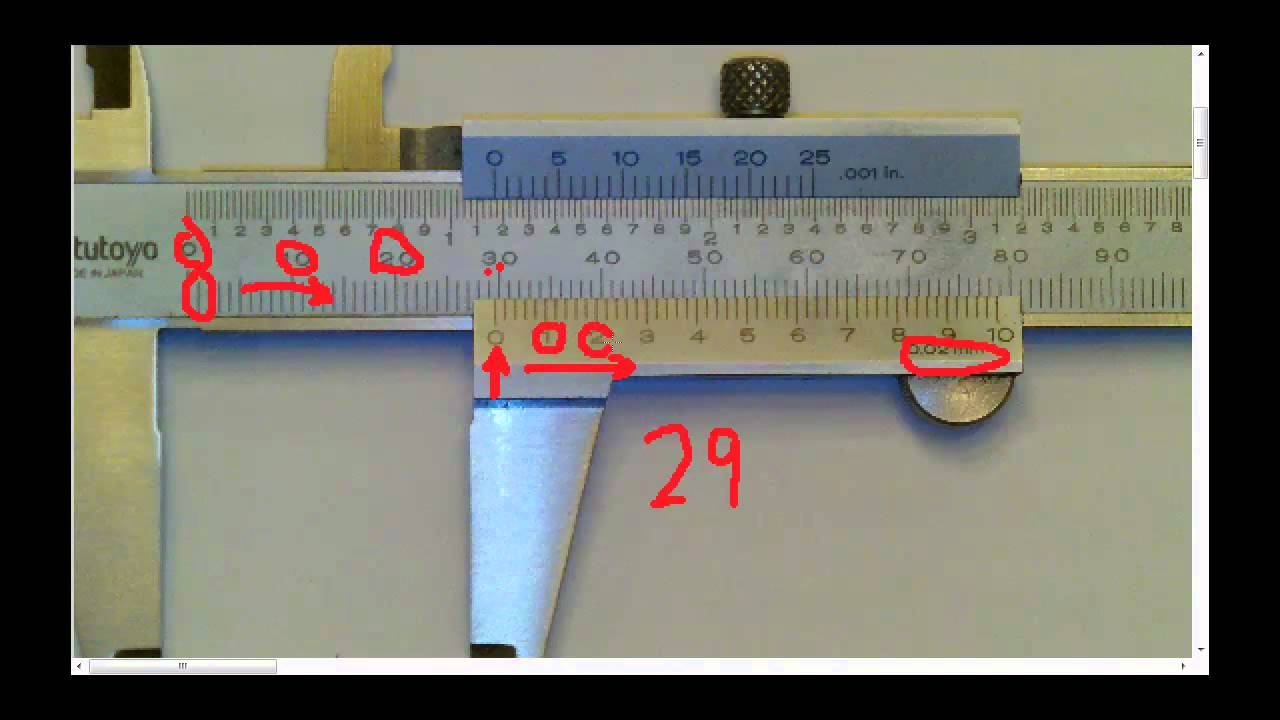
Metric Vernier Caliper Reading - Youtube

Reading A Vernier
How To Use Use A Vernier Caliper


How To Read A Vernier Caliper Steemit

How To Read A Cheap Plastic Vernier Caliper With 005mm Increments

How Do You Read A Metric Vernier Caliper - Wonkee Donkee Tools

How To Use A Vernier Caliper - Quick Guide Shakedeal

How To Use A Vernier Caliper 10 Steps With Pictures - Wikihow

How To Read Vernier Calliper Wwwamiestudycirclecom Vernier Caliper Vernier Calipers

Calipers - Wikipedia
How To Read The Metric Version Of Vernier Calipers


The Vernier Caliper - Manual Version

How To Read Vernier Caliper Mm - Online Discount Shop For Electronics Apparel Toys Books Games Computers Shoes Jewelry Watches Baby Products Sports Outdoors Office Products Bed Bath Furniture Tools
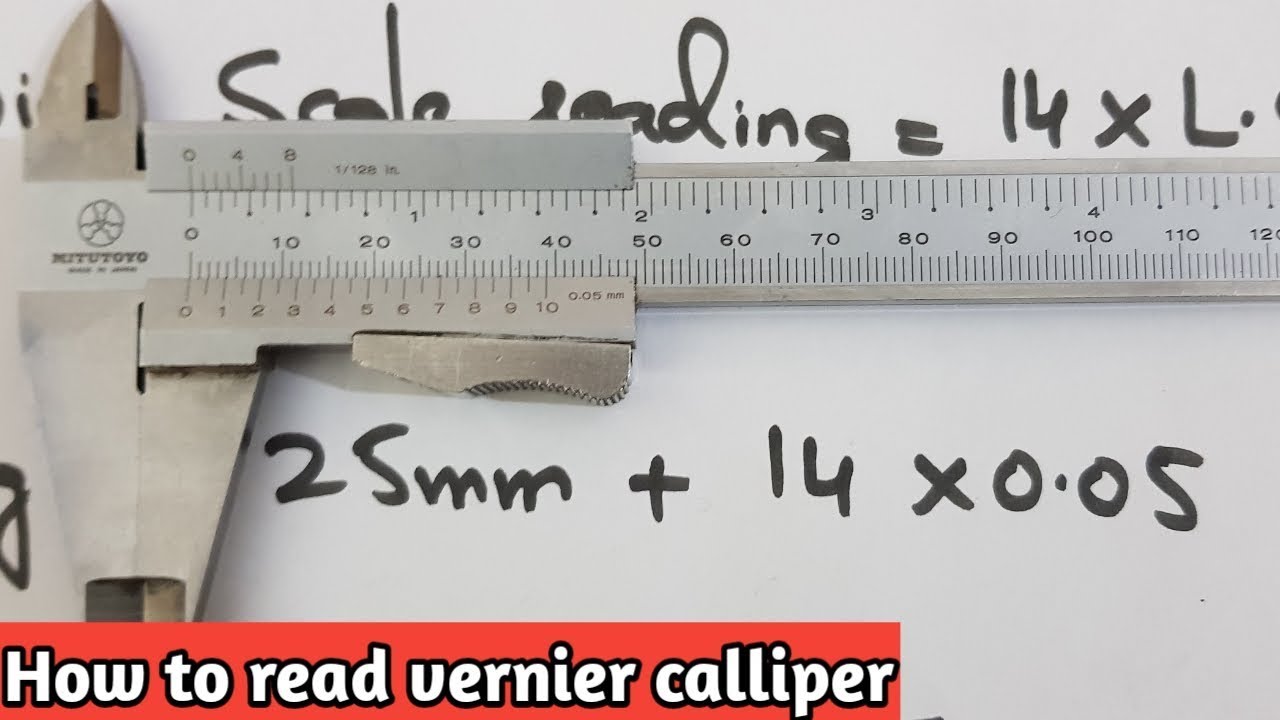
How To Read Vernier Calliper - Youtube
Amie Institution Of Engineers India Mechanical Engineering Design And Calculations How To Read Vernier Caliper And Micrometer

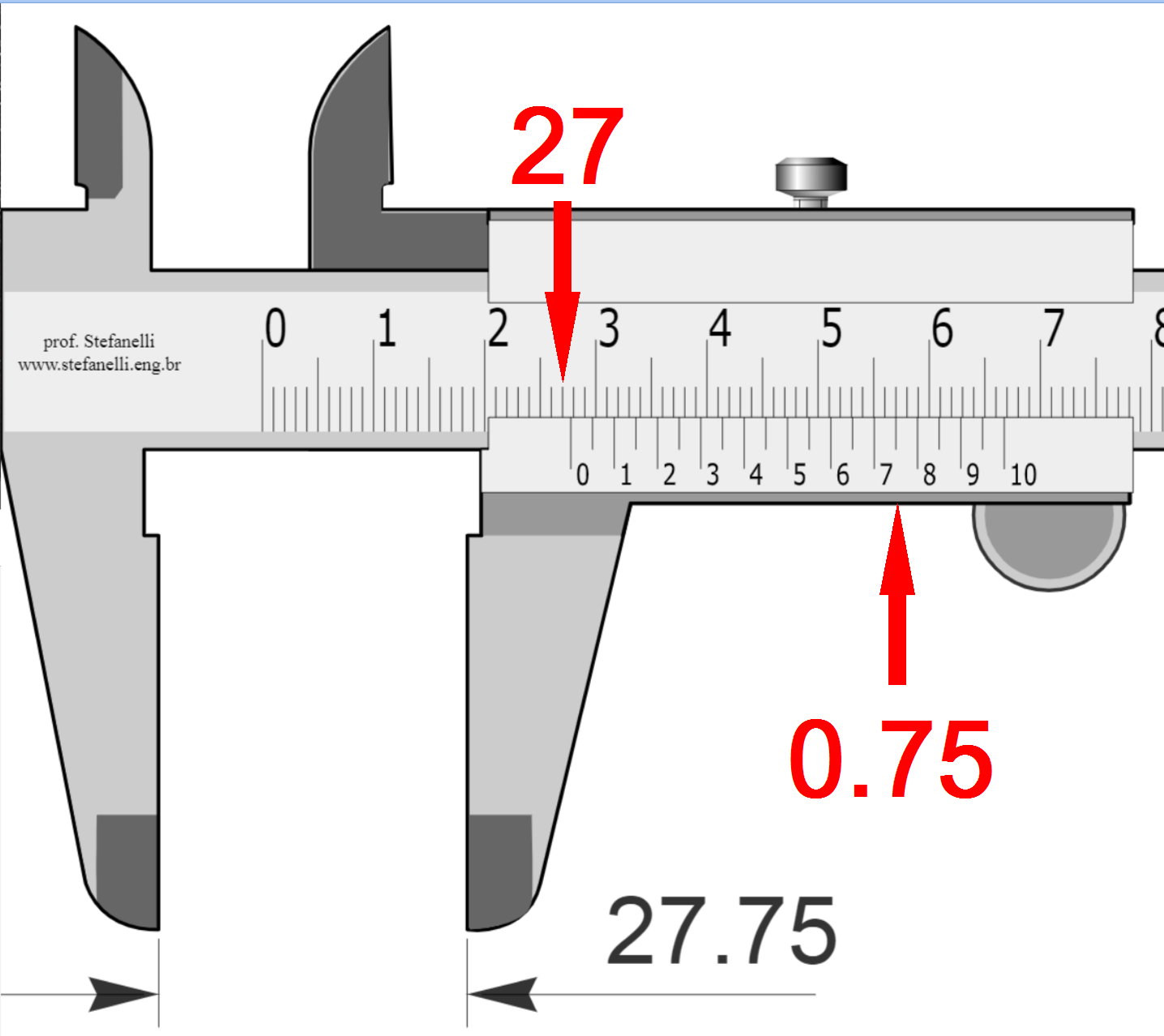
How To Read Vernier Caliper Mm - Online Discount Shop For Electronics Apparel Toys Books Games Computers Shoes Jewelry Watches Baby Products Sports Outdoors Office Products Bed Bath Furniture Tools
How To Read The Caliper Vernier Scale Easily - Youtube

Virtual Vernier Caliper - Simulator In 005 Millimeter Prof Eduardo J Stefanelli
Using The Vernier Calipers Micrometer Screw Gauge Department Of Physics

